The Prophet of Europe

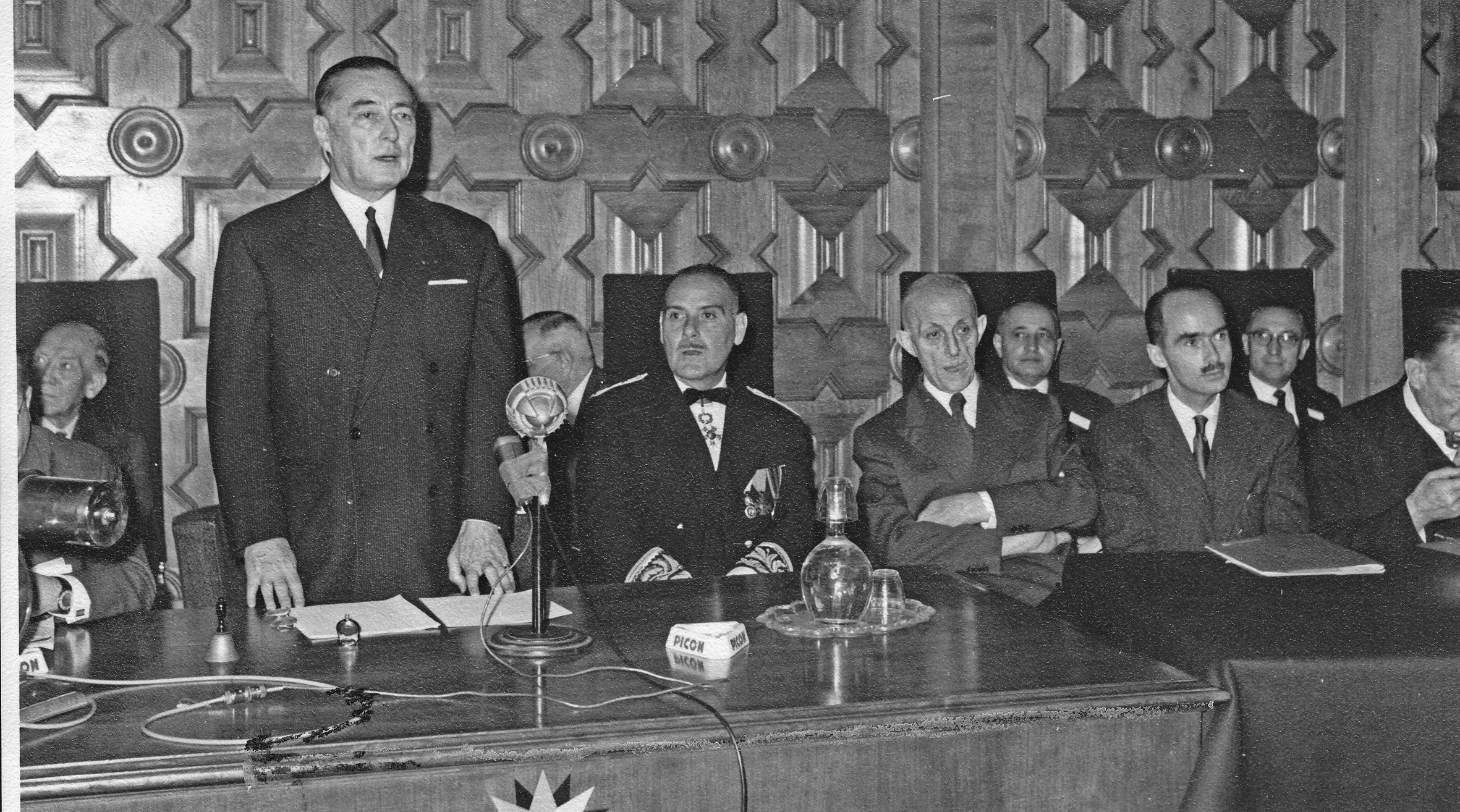
Richard Nikolaus Count Coudenhove-Kalergi, philosopher, political writer, “Prophet of Europe,” founder of the Paneuropean Union. Born on November 17, 1894, in Tokyo, died on July 27, 1972, in Schruns, buried in Gstaad. In 1913, he graduated from the Theresian Military Academy in Vienna; in 1917, he earned his doctorate in philosophy from the University of Vienna.

In 1914, he married Burgtheater actress Ida Roland. With his article “Paneuropa. A Proposal,” published in November 1922, he initiated the crucial step toward founding the Paneuropean Union, aiming for a political and economic unification of Europe. In 1938, he fled from German troops; from 1940 to 1946, he lived in exile in New York.

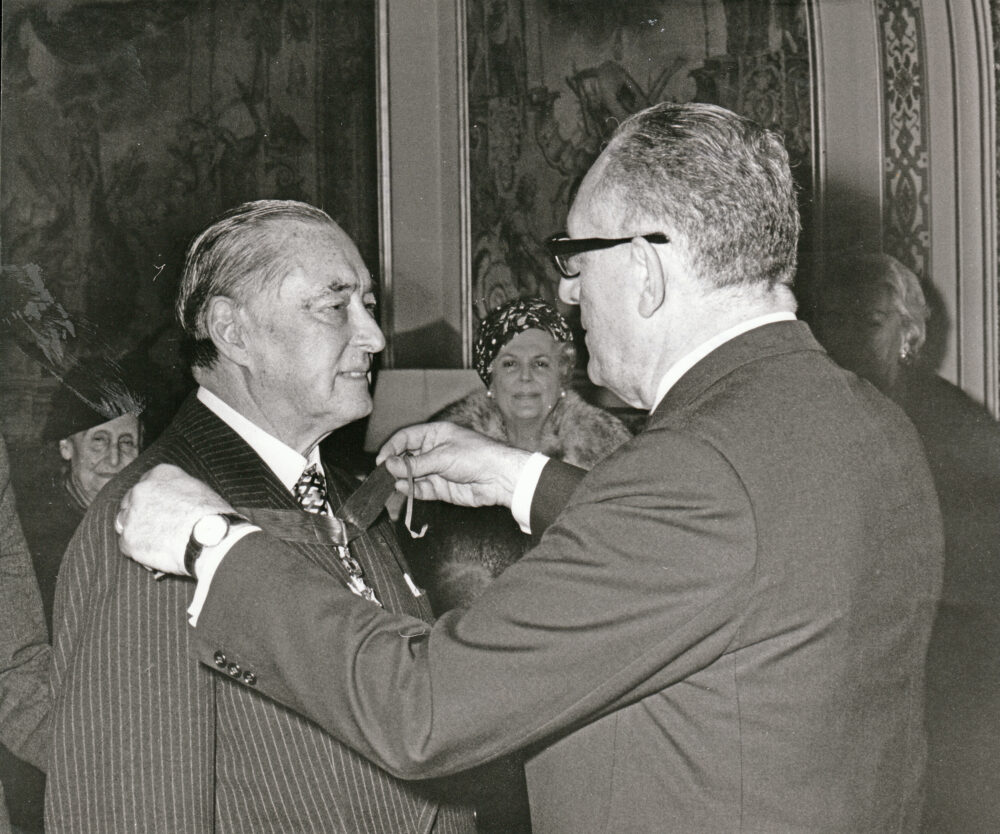
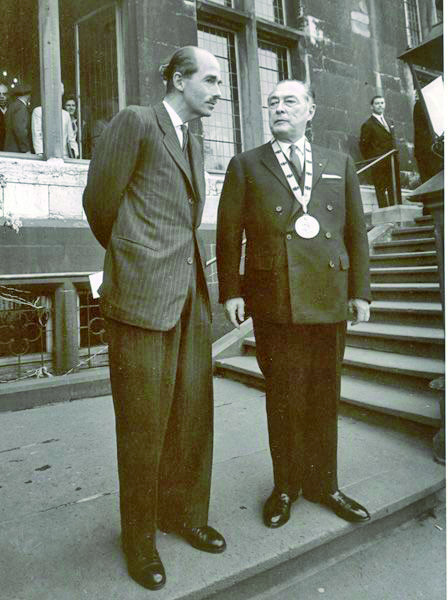
In 1947, he founded the European Parliamentary Union. He led the newly established Paneuropean Union as its president until his death. In 1950, he received the Charlemagne Prize from the city of Aachen.

Works: Paneuropa (1923), The Paneuropean Manifesto (1924), Stalin & Co. (1931), Europe Awakens (1934), Total State – Total Man (1937), The European Nation (1953), World Power Europe (1971), among others.
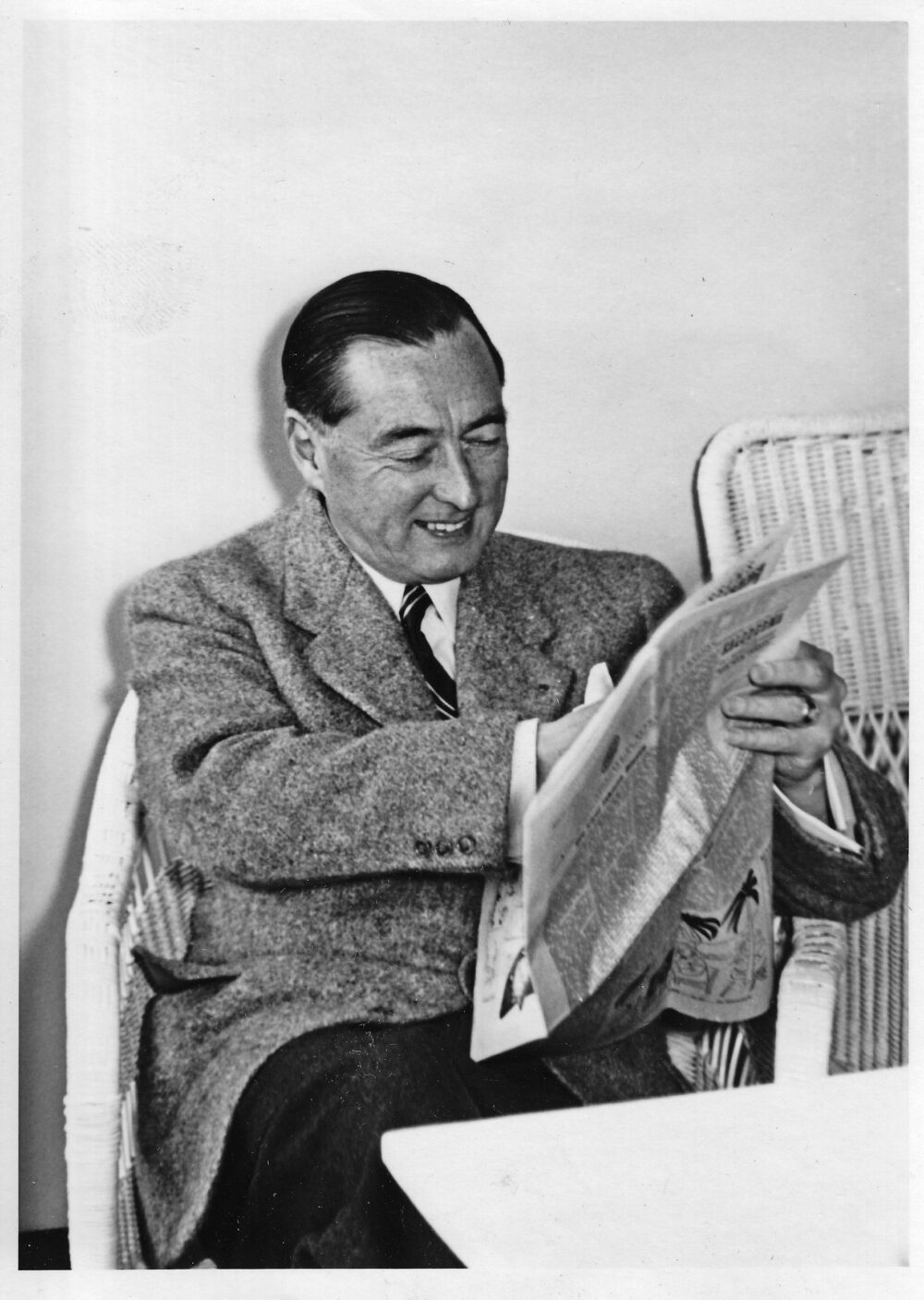
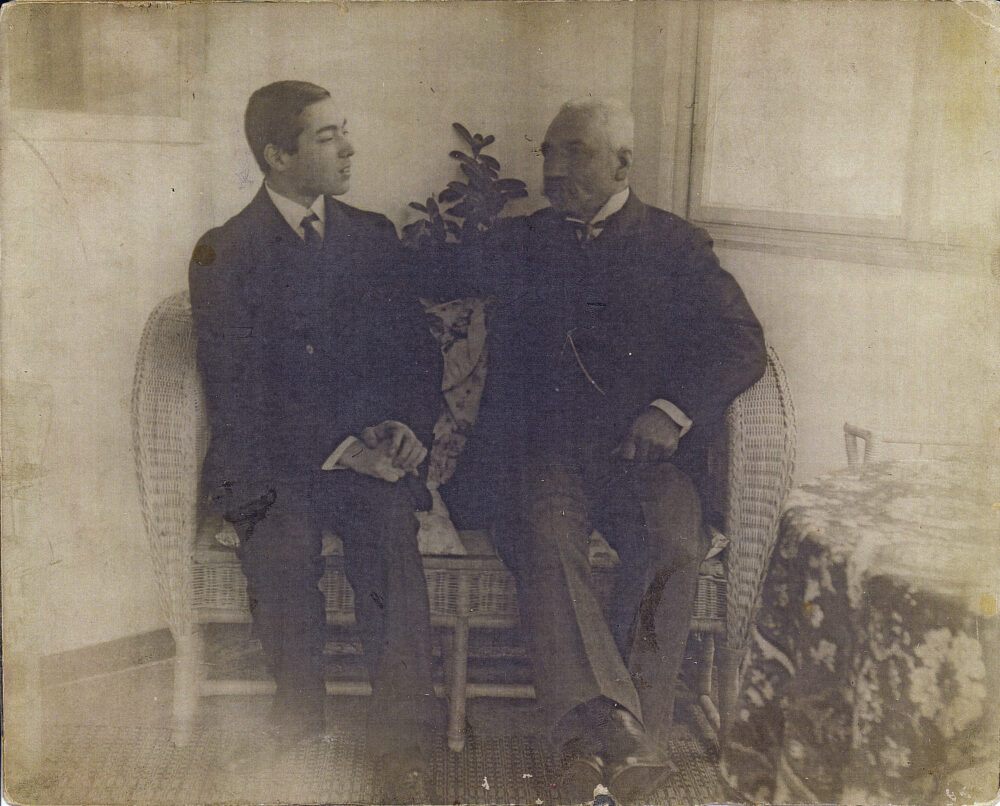
Otto von Habsburg on Richard Coudenhove-Kalergi

Richard Coudenhove-Kalergi was an extraordinary figure in many respects: Born in distant Tokyo, he dedicated his life entirely to the unification of Europe. Though his character inclined him toward a contemplative lifestyle, his life’s path was full of restless activity for Paneurope. Shaped externally and in his thinking by his dual heritage – Japanese on his mother’s side, and from many European countries on his father’s side – all nationalism was alien to him. Thus, he became the visionary of a free, peaceful, and united Europe.

For five decades, he stood at the helm of the Paneuropean Movement he initiated: as its driving force and its public face, as its intellectual pioneer and its visionary. In doing so, he was always not only willing to personally step back behind the great political goal but also to allow other personalities to take center stage in contemporary history. When, toward the end of his life, one of his friends remarked that it was unjust that the father of European unification had not yet received the Nobel Peace Prize, Coudenhove-Kalergi replied: “I prefer to have deserved the prize but not received it, rather than to have received it but not deserved it.”

Because he was truly concerned with the unification of Europe, and not with his own glory, he initially wanted to grant Masaryk, later Briand, and still later Churchill, Schuman, or De Gaulle the honor of becoming the unifier of Europe. Yet, whenever he had the impression that others would stop halfway, he once again became a trailblazer, once again placing himself at the forefront of the European avant-garde.

Europe as a Unit

Europe seemed to him to be a single entity: the land of his father. However, in the struggle among nations during the First World War, not only his homeland Austria-Hungary perished, but also Europe’s global standing as a whole. Nationalism destroyed the microcosm of that supranational order which Coudenhove-Kalergi’s father, Heinrich, had established at Ronsperg Castle in Bohemia, as well as the macrocosm of the supranational order of Austria-Hungary. A Europe fragmented by nationalism and torn by enmities could not be viable or have a future. Richard Coudenhove-Kalergi was deeply convinced of this. As a connoisseur of history, he sensed at the end of the First World War that Europe had squandered its global position. America and a Soviet Russia, broken away from Europe, had entered the stage of world politics. Europeans urgently needed to find a new form of coexistence to save peace and preserve their freedom.

Soon after the end of the First World War, the young philosopher clearly saw that the European continent would drift toward an even greater, more terrible catastrophe if the states of Europe continued down the nationalist misguided path. When he realized that the leading statesmen of the post-war era were not prepared to change course, he decided on a private initiative: Just as a small snowball can trigger an avalanche, his slim book “Pan-Europa” was intended to start a mass movement – to save Europe and prevent a second World War. In his preface to this book in 1923, he wrote: “This book is destined to awaken a great political movement that slumbers in all the peoples of Europe.”

Richard Coudenhove-Kalergi was not content merely to communicate his insights to individual statesmen and, through his books, to a broader public. He saw it as a moral duty to follow insight with action. Because he foresaw the impending future war in 1922, he could not but oppose the approaching catastrophe with all his might. Unlike many other thinkers of his time, Coudenhove-Kalergi was not a prophet of doom, but a visionary of Europe’s awakening.

Half a Century in Europe’s Service

Some academics and political fringe figures later tried to accuse him of naivety. But were not those more naive who failed to see that the fragmentation of Europe into small states and nationalist confusions would lead directly to a war from which all Europeans could only emerge as losers? How much suffering would Europeans have been spared if more statesmen had listened to the private citizen Coudenhove-Kalergi, if a greater number of intellectuals and larger masses had followed his appeals.

If Coudenhove-Kalergi courageously confronted the pernicious spirit of nationalism in the 1920s and 1930s, it was not out of naivety, but out of clear-sighted realism and personal heroism. This heroism is thoroughly realistic, for world history is not made by an anonymous zeitgeist. It is people who shape the spirit of their time, and thus it is also people who can contradict and change it.

Often in his life, the founder of the Paneuropean Movement felt that the so-called zeitgeist resisted his ideals. But he was no opportunist who would have allowed himself to be carried by the waves of whatever was modern at the time. He had firm principles, which he upheld even against every trend. Therefore, he could resist both National Socialism and Communism with the same consistency and credibility. And at the same time, despite all his steadfastness in principles, Richard Coudenhove-Kalergi was quite flexible in pragmatic matters. His Paneuropean work spans half a century. In his actions as well as in his publications, it shows that Coudenhove-Kalergi never lost sight of the goal, but certainly knew how to vary the path to be taken and the speed.

With or Without Great Britain?

When he saw that a unification of Europe with Great Britain would be impossible, he coined the phrase “If possible with England, if necessary without England.” When the Soviet Union dominated half of Europe and had extended its power as far as Ronsperg, the home of the Paneuropean founder, he began the unification in the West – never losing sight of the great goal. When he realized in the early 1920s that governments would not take the initiative, he turned to the peoples of Europe. After the Second World War, he gathered the pro-European parliamentarians of Europe’s freely elected parliaments. And when their initiative had come to an end, he appealed to the leading statesmen of the continent.

Maligned as a Utopian

Again and again, Coudenhove-Kalergi was ridiculed as a utopian. Yet his vision was no utopia. After the Second World War, statesmen like Winston Churchill, Charles de Gaulle, Konrad Adenauer, Alcide de Gasperi, and Robert Schuman sought Coudenhove-Kalergi’s advice and were inspired by his ideas. The fruits of this era brought Europe a new flourishing: reconciliation between France and Germany, the Council of Europe, and eventually the European Economic Community, from which the European Community and later the European Union emerged. As Coudenhove-Kalergi had already predicted in the 1920s, the idea of Europe became a successful idea for peace. Wars or even violent conflicts between member states of the European Union have become completely unthinkable. Many take this for granted. But anyone who knows the history of Europe, especially in the twentieth century, knows that peace is never a given.

Many contemporaries mentally fight the battles of yesterday instead of addressing the coming challenges. The founder of the Paneuropean Movement wasted no time rehashing past struggles but turned to the looming dangers. Thus, he was attacked from different directions at different times. In the early years of the movement, some turned away from him because he uncompromisingly opposed National Socialism, others because he urgently warned against Stalin and Soviet expansion. In his later years, it was not much different. When this great European died, I honored him in the summer of 1972 in an obituary that was published in many newspapers.

The Most Successful Idea of the Century

At that time, I wrote, honoring Coudenhove-Kalergi’s final struggles: “He had previously been attacked for supporting General de Gaulle’s Ostpolitik. Now he was accused of having become a ‘cold warrior’ because he vehemently opposed a negotiation in which a single superpower, Russia, would face a multitude of disunited small states. This criticism, sometimes from the right, sometimes from the left, could not deter Coudenhove from his path. Like few other people, he was inwardly independent of his environment. The deeper reason for this was probably that he expected nothing from life, that he possessed a high sense of duty, and was always ready to fulfill his duty for its own sake. From the same feeling also stemmed his lack of interest in power. Coudenhove was not a politician in the usual sense of the word. He was not out to garner applause or obtain a position. Certainly, approval and honors pleased him. But that was not the ultimate motive for his actions. For him, service to the idea was paramount. He remained true to this idea under the most difficult circumstances.”

The idea of political unification of Europe, developed by Richard Coudenhove-Kalergi and led to its first successes, was the most successful idea of the past century: It created a zone of peace, freedom, rule of law, relative prosperity, and security. The founder of the Paneuropean Movement, in his prophetic appearance, reminded me in many ways of Moses: Unwaveringly devoted to the goal, he led his people to the borders of the promised land. He himself was only granted a glimpse into the promised land. Others had to walk the final stretch. Thus, Richard Coudenhove-Kalergi, who died on July 27, 1972, could only surmise that his life’s work would bear rich fruit.

The vast literary work of Richard Coudenhove-Kalergi includes interesting philosophical treatises and countless political writings. The latter revolve around his thoughts on the unification of Europe. His selflessness, his adherence to principles, and his commitment to the great goal, always marked by youthful passion, should continue to serve as an example for the Paneuropean Movement.

Become a Member

Contribute your ideas, experience, and conviction for a united Europe. Become part of an independent and non-partisan movement.