The Art of the Deal
In a few days, the summit between American President Donald Trump and Russian President Vladimir Putin will take place. The primary focus will be on Syria and Ukraine. A commentary by Karl von Habsburg.
Helsinki instead of Vienna. For a long time, there was speculation that the meeting between US President Donald Trump and Russian President Vladimir Putin would take place in Vienna. Following the very friendly reception of Putin on 5 June in Vienna, a rumour was launched that the Russian President had requested a meeting between himself and his American counterpart be organised in the Austrian capital. Now, the encounter between the two heads of state will take place on 16 July in the Finnish capital, Helsinki.
From the outset, it was clear that two topics would be at the heart of the talks: Syria and Ukraine. In Syria, the USA had banked on regime change. However, with Russia’s massive intervention, Putin has not only brought the Syrian despot Assad back to the winning side, but has also bombed himself and Russia into a decisive negotiating position. Without Moscow, there will be no agreement on Syria – which will, of course, have repercussions for the situation in the Middle East. The USA and Russia are pursuing divergent interests.
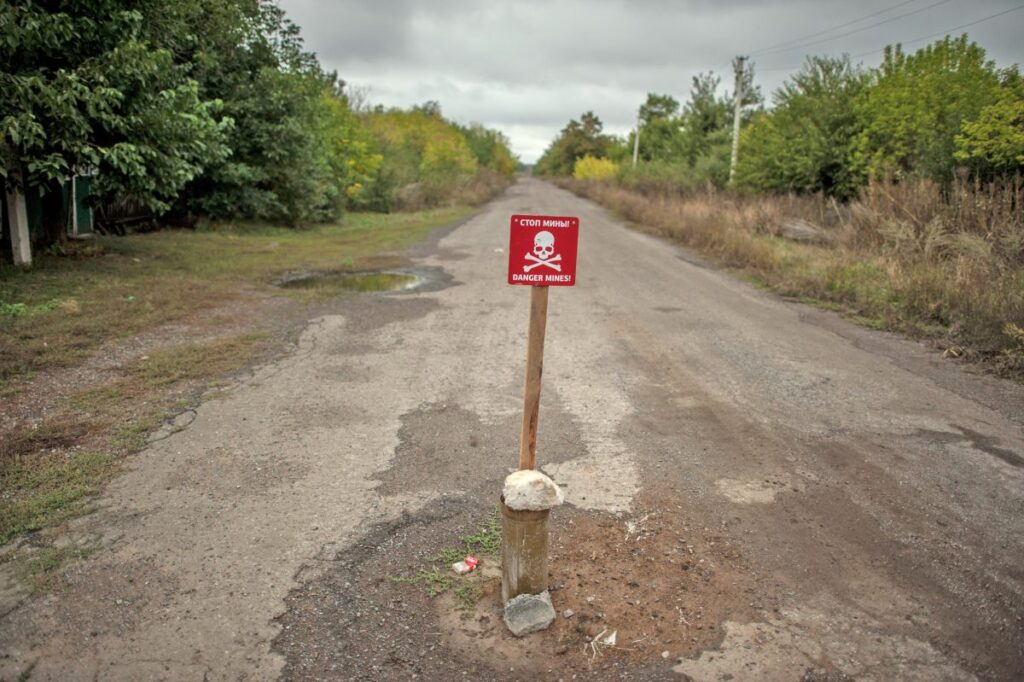
In the war in Ukraine, the USA stands clearly on the side of Ukraine. With its invasion of Crimea and the subsequent annexation of this part of Ukraine, Russia began a war against its neighbour that continues to claim numerous lives in the east of the country. Here, too, there is a clear conflict of interest between Moscow and Washington.
It is well known that Donald Trump likes to make “deals”. He justified his termination of the Iran nuclear agreement by stating it was a “bad deal”, and believes he has also struck a deal with the tyrant in North Korea, Kim Jong-un. What kind of deal, then, could emerge from the meeting with Vladimir Putin?
Could there be a trade-off of interests in Syria and Ukraine? Could the US President agree to a “deal” in which the USA acknowledges Russia’s annexation of Crimea, which is contrary to international law, and Putin is given a free hand in eastern Ukraine (whatever quid pro quo the USA might receive for this in Syria)? A nightmare for Ukraine and a danger for Europe. Both presidents are known to prefer a fragmented Europe of small states over a united Europe within the EU.
Such a scenario would be a catastrophic development for several reasons. Who could then guarantee that Putin would stick to the “deal”? Russia would have confirmation that invading a neighbouring country pays off. Which adventure would be next? A further advance into Ukraine? Or Georgia? Or an invasion of one of the Baltic states? It would also be a clear signal that the USA under Trump is no longer a reliable international partner. This is not just a question of values; it is about guaranteeing the sovereignty and independence of Ukraine, as established in the Budapest Memorandum. The USA is a guarantor power of this agreement. Russia, incidentally, is another guarantor power, though it has long since abandoned the basis of treaties and international law.
But regardless of what comes out of the meeting between the two presidents in Helsinki, Europe must draw one definitive conclusion: Europe must finally put itself in a position to act independently in matters of foreign and security policy!
The article originally appeared on the website of Karl von Habsburg.
