Bulgaria – Parliamentary elections review
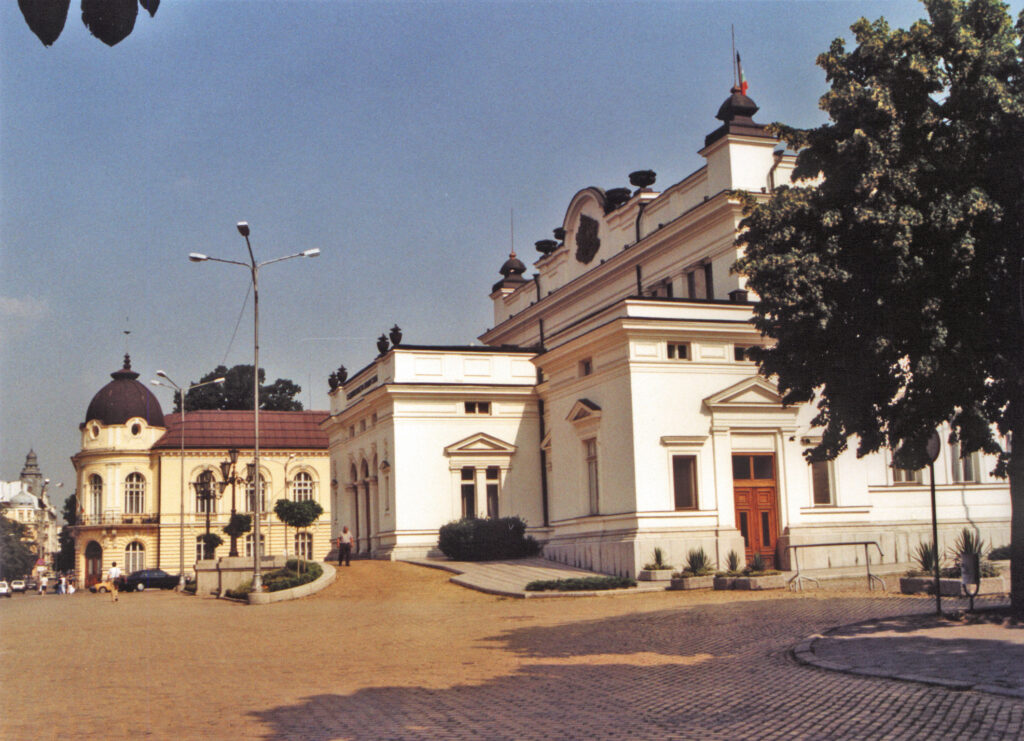
On 11 July, the Bulgarian people will head to the polls for the second parliamentary elections of 2021. Following the surprises of the 4 April elections, the emergence of new players and the inability of fragmented parliamentary parties to form a working coalition have brought Bulgaria to a new round of elections. By Ekaterina Dimitrova and Viktoriya Dimova
(A German translation of the text can be found below.)
As predicted by sociologists, the GERB (centre-right) party, which has ruled the country for the last 7 years, ended up with the highest number of seats by winning 26% of the vote. As a result of major anti-government protests against Boyko Borissov’s government in the summer of 2020, and the pandemic—in which Bulgaria suffered the second-highest COVID-19 death rate in the European Union—GERB lost a significant number of votes compared to its 33% in the 2017 elections. But then comes the surprise. In the last decade, GERB was competing with the main opposition party, the BSP (Bulgarian Socialist Party). This was not the case in April, however. The Socialists were overtaken by the showman Slavi Trifonov, whose newly formed party (There Is Such a People) took 17% of the votes, compared to the 15% of the BSP.
Who is the runner-up showman?
Slavi Trifonov has been the anchor of the late-night “Slavi’s Show” on Bulgaria’s leading broadcaster for the last 20 years. A trained musician, producer, and owner of his own TV channel, Slavi is not entirely unknown to politics. In the turbulent times of the 90s for the newly born democracy in Bulgaria, Trifonov was part of the student political-satire TV show “Kuku”, from which many activists and new political figures emerged. Slavi continued embodying his political views in his own show and music career. Slavi’s major breakthrough into politics came in 2016 when he initiated a nationwide referendum. Though none of the referendum’s proposals, in which 2.5 million Bulgarians cast their votes, were implemented by Parliament, this move was a clear sign to everyone that Trifonov’s entry into parliamentary elections was just a matter of time. Slavi’s referendum questions served as the core of his programme in the 2021 elections:
– Change of the electoral system from proportional to a majority one (an idea which Trifonov’s MPs surprisingly omitted upon entering the 45th Bulgarian Parliament)
– Decrease in the number of MPs in the National Parliament
– Direct election of national prosecutors
– Decrease in national subsidies for parties to 1 lev per vote (50 euro cents)
– Change in the electoral code to make it easier for Bulgarians abroad to cast their vote.
Despite these radical changes, Trifonov’s goals in domestic as well as foreign policy remain unclear.
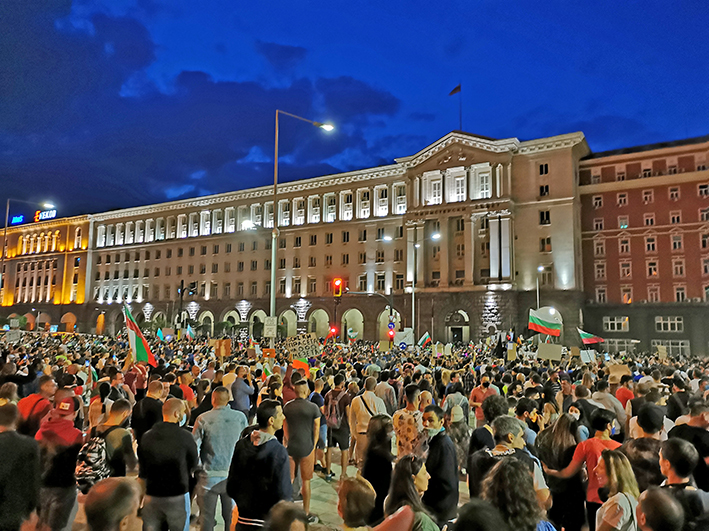
Summer 2020 anti-Borissov protests in Sofia
A final point about Trifonov’s path to second place in the last elections that deserves attention is his political campaign. Trifonov’s party candidates refused to appear in any major political debates on national TV broadcasters; their main channel of communication with voters was their own cable TV channel (7/8) and Facebook. Another tool used by Trifonov throughout the years was his musical concerts, attracting hundreds of thousands of attendees. Trifonov pulled out his last ace two days before the elections by organising a major online concert for his supporters. This resulted not only in major domestic support but also a huge number of votes from the Bulgarian diaspora abroad, making Trifonov the most favoured politician for Bulgarian emigrants.
Surprisingly, shortly before the start of the new electoral campaign on 11 June, Trifonov announced he would not be running for MP personally. However, he implied he might hold a position in another institution, fuelling rumours that he is aiming for the Prime Minister’s seat.
Opposition failing fast, and the success of protest parties
The April elections brought mainly disappointment and even caught the main opposition party, the Bulgarian Socialists, by surprise. Their third-place finish was shocking, but could be explained by the turbulence in the party leadership and many socialists leaving the party, frustrated by the actions of Kornelia Ninova (the party leader).
On the other hand, activists who triggered and coordinated the summer anti-government protests emerged into the parliamentary picture. “Stand up! Thugs out!” managed to cross the 4% barrier. “Democratic Bulgaria”—a union of the Sofia centre-right wing, the liberal “Yes, Bulgaria” and the Green Party—increased their votes, marking a top result in the Bulgarian capital.
The Impossible Coalition
Bulgarian Constitutional Law states that the first two parties with the highest public support are given the mandate by the President of the Republic to form a government. As the first political party in the electoral race, GERB did not propose Boyko Borissov for Prime Minister. Instead, the mandate was taken by Daniel Mitov, a former member of the centre-right “Democrats for a Strong Bulgaria” and a foreign minister from Borissov’s second cabinet. Although GERB was willing to cooperate with everyone, it seemed that all other parties were united against Borissov’s party, resulting in GERB’s inability to form a fourth cabinet. The second mandate was given to Slavi Trifonov’s party, which immediately returned it. In a live Facebook video—Slavi Trifonov’s main channel of communication—he claimed to be following the people’s will for a new type of anti-establishment government and that the final decision of the Bulgarian people should be voiced again at the elections. The third mandate, according to Bulgarian Constitutional Law, is decided by the President of the Republic. The President can give it to the third party with the highest poll result or to any other of their choosing. Unsurprisingly, the mandate was given by President Rumen Radev to the third party—the Bulgarian Socialist Party.
Summer 2020 anti-Borissov protests in Sofia
The short-lived 45th Bulgarian Parliament was dissolved, and new elections were scheduled for 11 July 2021. Until the summer elections, the country’s governance is in the hands of the caretaker government appointed by President Radev. The first days of the interim government were marked by immediate changes of key institutional heads. Continuing the motto and mission of the Parliament for a full revision of Borissov’s rule, the caretaker government’s actions further exacerbated the institutional crisis and the confrontation between Borissov and Radev.
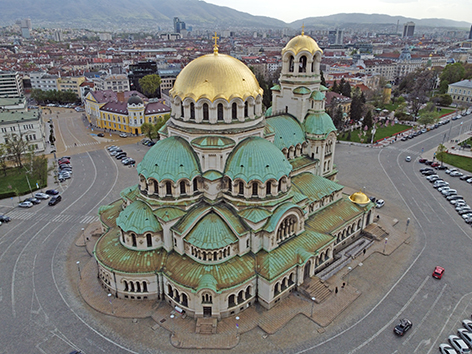
St Alexander Nevsky Cathedral
All eyes on: The breakdown of the Bulgaria and North Macedonia dialogue
The opening of negotiations for North Macedonia’s accession to the EU and the Bulgarian position have been in the spotlight in recent months. The dispute between the two parties concerns cultural issues relating to the Macedonian language and the nationality of the hero Goce Delcev. (1) In November 2020, Bulgaria blocked the accession talks with North Macedonia. Despite being a promoter of EU enlargement in the Western Balkans, especially during its EU Presidency in 2018, under Borissov’s cabinet the country blocked its neighbour’s path to the EU. Politicians, activists, think-tanks, and NGOs have called for wiser moves from both sides. In November 2020, PanEuropa Bulgaria, together with PEU Macedonia, published a joint declaration urging the governments and institutions of Bulgaria and North Macedonia to continue communicating in good faith and to overcome any obstacles that might hinder North Macedonia’s progress towards our shared European future. The caretaker government continues the same policy, as stated by President Radev and the caretaker foreign minister Svetlan Stoev.
COVID-19 or Corruption? Which is the Biggest Threat to Our Democratic Freedoms?
In most countries, there is no direct normative definition of corruption. In Bulgaria, the only legal definition of corruption can be found in the laws ratifying the Civil Law Convention on Corruption of the Council of Europe, and the Criminal Law Convention on Corruption ratified in 2000 and 2007. (2) A study of these Conventions reveals that disciplinary and administrative offences, misappropriation, and the buying of voters remain outside the definition. Following the current scandals in Bulgaria, it is understandable why the media calls Bulgaria the “EU’s mafia state” (3).
The statistics are not very positive. According to Transparency International’s Corruption Perceptions Index (CPI) for 2020, Bulgaria is at the bottom of the EU ranking for lack of corruption (4). The first report from Brussels on the rule of law dedicates 26 pages to Bulgaria, indicating that major problems remain unresolved (5). The ruling party (GERB) had a different understanding of the report, claiming it was “positive and objective”. Other metrics, such as the Global Corruption Barometer, the Freedom Barometer, and the WJP Rule of Law Index, demonstrate how in Bulgaria there is no rule of law, but rather the rule of corruption.
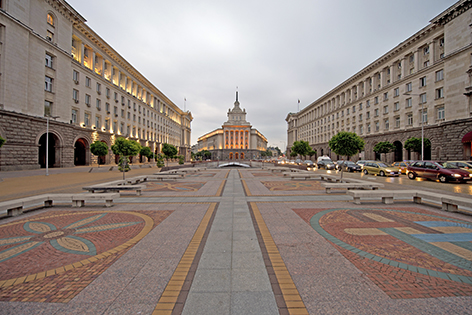
Government District, Sofia
In 2020, for months, the streets of Bulgaria were packed every night with protesters. Too many scandals that shook the country remained unresolved, including the CCB case (6), ApartmentGate, the “Eight Dwarfs”, the ‘Kompromat’ photo of Prime Minister Borissov, a Dubai businessman admitting to paying a “comfort fee” in cash to the former Prime Minister and Finance Minister, and organised auctions for pre-selected companies. It seems there is impunity for anyone with money.
The boutique case of the Bulgarian Development Bank recently shook the country. Created to support small businesses, the financial institution distributed loans worth 946 million BGN to only eight companies related to the business of big oligarchs. We now have a “Bulgarian Oligarch Bank” (7).
Last year, people tried to express their anger at the erosion of the rule of law and the rampant abuses of power, but mostly at the fact that the government is making a fool of them. Unpunished corruption leads to a sense of impunity. In Bulgaria, there are no general convictions for high-level corruption compared to Romania. The saddest thing is that corruption is becoming a norm of social behaviour that is sometimes the only alternative for poor people. A country where corruption thrives is a weak country. At some point, living in such a country becomes an act of self-sacrifice.
The 2021 Bulgarian parliamentary election resulted in a political deadlock. Bulgaria voted for change and sent three new parties to Parliament. When reading the political party programmes, what catches the attention is that not all parties have a concrete plan on how to fight corruption and uphold the rule of law.
“Democratic Bulgaria” (8) and “There Is Such a People” (9) want new rules for the functioning of the courts. A new model for the Supreme Judicial Council (SJC) is presented in the programmes of “Democratic Bulgaria”, “Stand Up! Thugs Out” (10) and “There Is Such a People”. The first two proposed a reduction of the parliamentary quota in the SJC to five members, while “There Is Such a People” wants to abolish the quota completely. The closure of specialised courts is put forward by “Democratic Bulgaria”, “There Is Such a People” and the “BSP”.
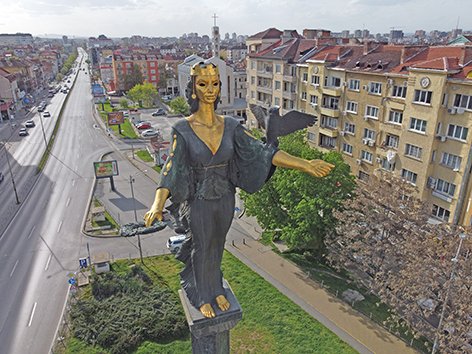
The Statue of Holy Sofia / Sveta Sofia
The Prosecutor’s powers are widely discussed in the programmes. The closure of the Office is supported by “Democratic Bulgaria”, “There Is Such a People” and the “BSP” (11). “Democratic Bulgaria” argues that there should be judicial control over the Prosecutor’s acts related to criminal proceedings; “There Is Such a People” insists on judicial control over all acts of the prosecution that directly affect the interests of citizens; and the “BSP” proposes judicial control over absolutely all acts of the Prosecutor.
Regarding the election of the Chief Prosecutor, “Democratic Bulgaria” proposes a procedure of election by Parliament by a three-fifths majority on a proposal from the Justice Minister. “There Is Such a People” wants to introduce the direct election of the Chief Prosecutor. “Democratic Bulgaria” and “Stand Up! Thugs Out” insist on the need to reduce his term. A procedure for his dismissal at the initiative of the Minister of Justice or one-fifth of the Members of Parliament with a majority of three-fifths is suggested by “Democratic Bulgaria”. “Stand Up! Thugs Out” advocates for the early termination of the mandate of the current Chief Prosecutor. An interesting suggestion from “There Is Such a People” is to move the prosecution from the Judiciary into a completely separate independent body and establish a Supreme Prosecutorial Council. At the same time, the programme of “GERB” can no longer be found on their website.
The Movement for Rights and Freedoms “DPS” (12) does not mention concrete judicial or prosecutorial reforms at all. The judiciary and law enforcement are among the institutions most affected by corruption, and there is no real fight against corruption without real solutions.
Although corruption was the key trigger for protests in Bulgaria in 2020, Bulgarians were already protesting in 2019 against the nomination of the current Prosecutor, Ivan Geshev: a single candidate with questionable qualities, who is not considered independent or respected. (13)
Without an independent and strong Prosecutor’s Office, there is no way out of the vicious circle. That is why, two years later, people are still protesting in front of the Sofia Court House demanding the resignation of Chief Prosecutor Ivan Geshev.
The caretaker government, appointed until the July election, appears to be trying to bring transparency and light to the processes, focusing on the rule of law and dismissing key institutional leaders.
The 45th National Assembly had a short life and adopted only one law—changes to the Electoral Code. The most important thing they did was to set up a commission to revise the previous government. This Audit Commission checks signals of corruption indicating violations involving money from European programmes. There are allegations of corruption in the Ministry of Defence, the Ministry of Interior, the State Fund for Agriculture, and the State Reserve. The Prosecutor’s Office launched an investigation into the allegations made in the commission examining how state money has been spent in the last 10 years.
Pressure is being applied internationally as well. The EU has a soft approach, slowly intensifying its tone but lacking the backbone to speak out against corruption directly and take measures. However, on the other side of the world, the US opts for a more direct approach. On 2 June, Joe Biden’s administration imposed sanctions under the Global US Magnitsky Act on three Bulgarians and 64 legal entities for their involvement in corruption in Bulgaria. This is a precedent. Decisions to sanction are not made based on speculative or unverified information; measures are usually imposed only in obvious and undoubted cases. The US made clear that some practices are truly unacceptable and that “the United States stands with all Bulgarians who strive to root out corruption by promoting accountability for corrupt officials who undermine the economic functions and democratic institutions of Bulgaria” (14).
Corruption in Bulgaria has acquired a systemic character. The rule of law protects people from corruption only when it is applied correctly. When institutions are not independent, the rule of law and democracy are defeated.
Despite the political problems and lack of an effectively working judicial system, Bulgaria enjoys a thriving ICT sector, start-up, and entrepreneurial community. A new generation of well-educated Bulgarians from the world’s top universities, who have returned to their home country, are developing exponentially growing business projects that abide by the law and the market, sending a clear message that the business sector in Bulgaria can be independent. Civil society, the non-governmental sector, and youth organisations are another part of Bulgaria’s beating heart and tireless agents of change.
About the authors:

Ekaterina Dimitrova is a Programme and Project Manager at PanEuropa Bulgaria and a Board member of the Atlantic Club of Bulgaria. She holds a Master’s in EU Law and a Bachelor’s in International Relations from Sofia University and is the former editor-in-chief of the United Nations Association of Bulgaria media platform, UNA News.
Viktoriya Dimova is a Programs and Projects Manager at PanEuropa Bulgaria and the Atlantic Club of Bulgaria. She holds a Master of European Law from Paris 1 Pantheon-Sorbonne University, France, and a Master of Arts in European Interdisciplinary Studies from the College of Europe, Poland.
Photos: Cover image: Parliament in Sofia (Paneuropa Archive); Protests (Ekaterina Dimitrova), Alexander Nevsky Cathedral, Government District, Sveta Sofia (European Union 2021 Nikolay Doychinov)
1 https://www.europarl.europa.eu/doceo/document/E-9-2020-006807_EN.html
https://www.rferl.org/a/bulgaria-opposition-north-macedonia-eu-accession/31267364.html
2 Ministry of Foreign Affairs, Corruption, available at: https://www.mfa.bg/bg/ministerstvo/antikoruptsia/koruptsia
3 Ministry of Foreign Affairs, Corruption, available at: https://www.mfa.bg/bg/ministerstvo/antikoruptsia/koruptsia
4 Transparency International, Corruption Perception Index, available at: https://www.transparency.org/en/cpi/2020/index/nzl#
5 Daniel Smilov, “They say the report on Bulgaria is positive. Let’s see”, 1 October 2020, available at: https://www.dw.com/bg/%D0%BA%D0%B0%D0%B7%D0%B2%D0%B0%D1%82-%D1%87%D0%B5-
6 https://www.investor.bg/biudjet-i-finansi/333/a/kazusyt-ktb–kakvo-ne-se-sluchi-dosega-182367/
7 Mila Kisiyova, “BDB—some develop, others pay the bill”, 25 May 2021, available at: https://segabg.com/category-observer/bbr-edni-se-razvivat-drugi-plashtat-smetkata
8 Programme of “Democratic Bulgaria”, available at: https://demokrati.bg/program/svoboda-i-spravedlivost/
9 Programme of “There Is Such a People”, available at: https://pp-itn.bg/pravosydie/
10 Programme of “Stand Up! Thugs Out”, available at: https://izpravise.bg/programa-2021-2025/
11 Programme of “BSP”, available at: https://bsp.bg/files/predizborna-platforma.pdf
12 Programme of “DPS”, available at: https://www.dps.bg/izbori-2021/programa.html
13 Daniel Smilov, “Eight reasons why Geshev should not have been elected”, 24 October 2019, available at: https://www.dw.com/bg/%
14 Todd Prince, U.S. Places Sanctions On Bulgarian Power Broker, Gambling Tycoon, Citing Influence Peddling, 3 June 2021, available at: https://www.rferl.org/a/bulgaria-sanctions-us-peevski-boshkov-zhelyazkov-corruptiion/31287870.html
Bulgaria before and after the elections
On 11 July, the citizens of Bulgaria are called to the second parliamentary elections of 2021. The election on 4 April brought several surprises; new players emerged, but the fragmented parliamentary
parties were unable to form a coalition, leading to a new election.
As predicted, the GERB (centre-right) party, which has been in power for seven years, won the most seats in parliament with 26 per cent. Massive protests against Boyko Borissov’s government in the summer of 2020, as well as the pandemic—Bulgaria had the second-highest COVID-19 death rate in the European Union—led to significant losses for GERB, which had won 33 per cent in 2017. But then came the surprise. Over the past decade, GERB competed with the largest opposition party, the Bulgarian Socialist Party. But in April, things turned out differently. The Socialists were overtaken by showman Slavi Trifonov, whose newly formed movement “There Is Such a People” received 17 per cent of the votes, while the Socialists reached 15 per cent.
So, who is this showman? For 20 years, Slavi Trifonov had his own late-night show, “Slavi’s Show”, on Bulgaria’s leading television channel. The trained musician, producer, and owner of his own TV station is, however, no stranger to politics. During the turbulent 90s, when Bulgaria became a democracy, Trifonov was part of the student political satire “Kuku”, from which several activists and political figures emerged. Slavi began a career as a musician but incorporated his political views into his own show.
His breakthrough began in 2016 when he initiated a nationwide referendum. Since not a single proposal from this referendum, signed by 2.5 million Bulgarians, was implemented by parliament, it was only a matter of time for all observers before Trifonov would run in parliamentary elections. The demands of the referendum also formed the core of his programme for this year’s elections:
– Change of the electoral system from proportional to a majority voting system (an idea that Trifonov’s MPs surprisingly omitted when entering the 45th Bulgarian Parliament)
– Reduction in the number of MPs in parliament
– Direct election of national prosecutors
– Reduction of state subsidies for parties to 1 lev per vote (50 cents)
– Amendment of the electoral law to make it easier for Bulgarians abroad to vote.
Despite these radical changes, Trifonov’s goals in both domestic and foreign policy remain unclear.
Another point on Trifonov’s path to becoming number two in the elections that deserves attention was his political campaign. The party’s candidates refused to appear in the main election debates on state television. Their most important communication channel to voters was their own cable station (7/8) and Facebook. Another instrument was Trifonov’s concerts, which attracted hundreds of thousands of people throughout the year. The last ace Trifonov pulled out of his sleeve was an online concert for his supporters two days before the election. As a result, there was not only a lot of support within the country but also a high number of votes from the diaspora. Trifonov is the most popular politician among emigrants.
To everyone’s surprise, shortly before the start of the election campaign for 11 July, Trifonov announced that he would not be running for parliament himself. However, he hinted that he could attain a position in another institution, fuelling rumours that he actually wants to become Prime Minister.
Failure of the opposition benefits protest parties
For the largest opposition party, the Socialists, the April election brought a bitter disappointment. The party was shocked by its third-place finish. However, the result can also be explained by the turbulence at the top of the party. Many left the party because they were frustrated by party leader Kornelia Ninova.
On the other hand, activists who had launched the demonstrations against the government in the summer of the previous year were able to enter parliament. “Stand Up! Thugs Out” was able to cross the four per cent threshold. “Democratic Bulgaria”, a union of Sofia’s centre-right party, the liberal “Yes, Bulgaria” and the Greens, was able to achieve an increase in votes, particularly through a very good result in the capital.
The Impossible Coalition
According to the Bulgarian constitution, the two parties with the most votes receive the mandate from the President to form a government. GERB, the party with the most votes, did not nominate Boyko Borissov as Prime Minister, but rather Daniel Mitov, who was previously with the right-wing party “Democrats for a Strong Bulgaria” and served as Foreign Minister in Borissov’s second cabinet. Although GERB was ready to work with everyone, it seemed as if all other parties were united against Borissov’s party, making it impossible for GERB to form a fourth cabinet.
The second mandate to form a government was given to Slavi Trifonov’s party, which, however, returned the mandate immediately. In a live video on Facebook, the most important communication tool for Trifonov, he explained that the will of the citizens was for a new type of anti-establishment government, and the decision on this should be made in a new election. According to the constitution, the President decides on a third mandate. He can entrust the third-strongest party, but also another party, with forming a government. It was no surprise, however, that the Socialist Party received the mandate.
Anti-Borissov protests in the summer of 2020 in Sofia
The short-lived 45th Bulgarian Parliament was dissolved, and new elections were set for 11 July 2021. Until then, a caretaker government appointed by President Radev is managing affairs. The first days of this caretaker government were marked by a personnel exchange at the top of some key institutions. Continuing the motto and mission of the Parliament for a complete revision of Borissov’s government, the measures of the caretaker government further exacerbated the institutional crisis and the confrontation between Borissov and Radev.
Dialogue between Bulgaria and Macedonia
The opening of accession negotiations for EU membership for Macedonia (now officially North Macedonia) and Bulgaria’s stance on it have been at the political centre in recent months. The dispute between the two countries concerns cultural issues regarding the Macedonian language and the nationality of the hero Goce Delcev.1 In November of last year, Bulgaria blocked the start of accession negotiations. Although Bulgaria is a strong supporter of enlargement in South-East Europe, especially during its EU Council Presidency in 2018, the Borissov government blocked its neighbour’s path to the EU. Politicians, activists, think-tanks, and NGOs spoke out in favour of a serious treatment of the issue. The Paneuropean organisations of both countries published a joint declaration in November 2020 (see Paneuropa 5-6 2020, page 23), in which they called on the governments and institutions of both countries to continue communication in mutual trust and to seek ways to remove obstacles on Macedonia’s path to the EU. The caretaker government is pursuing the same policy, as stated by President Radev and Foreign Minister Svetlan Stoev.
COVID-19 or Corruption?
In most countries, there is no direct normative definition of corruption. In Bulgaria, the only legal definition of corruption is found in the laws ratifying the Council of Europe’s Civil Law Convention on Corruption and the Criminal Law Convention on Corruption, which were ratified in 2000 and 2007.2 A study of these conventions shows that disciplinary and administrative offences, embezzlement, and vote-buying do not fall under the definition. Looking at the current scandals in Bulgaria, it is understandable why Bulgaria is referred to in the media as an “EU mafia state”.3
The statistics do not show a positive picture. In Transparency International’s Corruption Perceptions Index, Bulgaria is found at the bottom of the EU rankings.4 The first Brussels report on the rule of law dedicates 26 pages to Bulgaria, noting that the main problems remain unresolved.5 The ruling party GERB had a different understanding of the report and claimed it was “positive and objective”. Other reports, such as the Global Corruption Barometer, Freedom Barometer, or the WJP Rule of Law Index, state that there is no rule of law in Bulgaria, but rather a law of corruption.
Last year, the streets of Bulgaria were filled every evening for months with protesters. Too many scandals that had shaken the country remained unresolved. To name a few examples: the CCB case6, ApartmentGate, the “Eight Dwarfs”, the “Kompromat photo” of government leader Borissov, a businessman from Dubai who confessed to having paid a “comfort fee” to the Prime Minister and the Finance Minister in cash, and organised auctions for pre-selected companies. There seems to be impunity for all those who have sufficient money.
A Bulgarian Oligarch Bank
Recently, the “boutique case” of the Bulgarian Development Bank shook the country. Originally created to support small firms, the financial institution granted loans amounting to 946 million leva (approximately 470 million euros) to only eight companies, which in turn belong to the businesses of major oligarchs. Now there is a “Bulgarian Oligarch Bank”.7
Last year, people tried to express their anger at the erosion of the rule of law, the rampant abuse of power, but above all the fact that the government is making fools of them. Unpunished corruption leads to a sense of impunity. In Bulgaria, compared to Romania, there are no general convictions for high-level corruption. The saddest thing is that corruption is becoming a norm of social behaviour, which for poor people is sometimes the only alternative. A country in which corruption flourishes is a weak country. At some point, life in such a country becomes an act of self-sacrifice.
Many proposals for judicial reform
The 2021 Bulgarian parliamentary election led to a political standstill. Bulgaria voted for change and sent three new parties to parliament. When reading the party programmes, it is noticeable that not all parties have a very concrete plan for fighting corruption and upholding the rule of law.
“Democratic Bulgaria”8 and “There Is Such a People”9 want new regulations for the courts. “Democratic Bulgaria”, “Stand Up! Thugs Out”10 and “There Is Such a People” have presented a new model for a Supreme Judicial Council. The first two groups want to limit the parliamentary quota in this judicial council to five; “There Is Such a People” wants to eliminate this quota completely. “Democratic Bulgaria”, “There Is Such a People” and the Socialists want to close the specialised courts.
The power of prosecutors is widely discussed in the programmes. “Democratic Bulgaria”, “There Is Such a People” and the Socialists support the idea of closing the office.11 “Democratic Bulgaria” calls for judicial control over the actions of the prosecutor in connection with criminal proceedings; “There Is Such a People” insists on judicial control of all actions of the prosecution that directly affect the interests of citizens; and the Socialists propose judicial control over absolutely all actions of the prosecutor.
For the election of the Chief Prosecutor, “Democratic Bulgaria” proposes election by parliament with a three-fifths majority, based on a proposal from the Justice Minister. “There Is Such a People” wants to introduce a direct election for this position. “Democratic Bulgaria” and “Stand Up! Thugs Out” insist on a time limit for the term of office. “Democratic Bulgaria” proposes his dismissal at the initiative of the Justice Minister or one-fifth of the MPs with a three-fifths majority in parliament. “There Is Such a People” wants an early end to the mandate of the current Chief Prosecutor. From “There Is Such a People” also comes the proposal to remove the prosecution from the judiciary and transfer it into a separate independent institution with a supreme prosecutorial council.
Meanwhile, GERB’s programme can no longer be found on the website. The “Movement for Rights and Freedoms” (DPS)12 mentions no concrete proposals at all for reforming the judicial system and the prosecution. Justice and law enforcement are heavily affected by corruption. Without a solution to the problem, however, there is no real fight against corruption.
Corruption was the main motivation for the protests in Bulgaria last year. As early as 2019, people protested against the current prosecutor Ivan Geshev: a single candidate with questionable qualities, who is accused of being neither independent nor respected.13 Without an independent and strong prosecution, however, there is no way out of the vicious circle. That is why now, two years later, people are still protesting in front of the court building in Sofia and demanding the removal of Chief Prosecutor Ivan Geshev. The caretaker government, which is in office until the elections in July, seems to be trying to bring light into the process and exchange key positions.
The 45th National Assembly had a short life and passed only one law—to amend the electoral law. The most important act was the establishment of a commission to revise the previous government. This audit commission is examining corruption allegations that point to violations involving funds from European programmes. There are corruption allegations in the Ministry of Defence, the Ministry of the Interior, the State Fund for Agriculture, and the State Reserve. The prosecution initiated an investigation into the commission’s allegations, which examined how state funds were spent over the past ten years.
International pressure: EU talks, USA acts
International pressure is also being exerted. The EU has a soft approach that slowly intensifies the tone, but it lacks the backbone to speak out directly against corruption and take measures. On the other side of the world, however, the USA decided on a more direct approach. On 2 June, Joe Biden’s government imposed sanctions against three Bulgarians and 64 legal entities for their involvement in corruption in Bulgaria under the Magnitsky Act. This is a precedent. Sanction decisions are not made on the basis of speculative or unverified information; measures are usually only imposed in obvious and indubitable cases. The USA made it clear that some practices are truly unacceptable and that “the United States stands with all Bulgarians who strive to root out corruption by promoting accountability for corrupt officials who undermine the economic functions and democratic institutions of Bulgaria.”14
Corruption has taken on a systemic character in Bulgaria. The rule of law only protects people from corruption if it is applied correctly. If institutions are not independent, the rule of law and democracy are defeated.
Despite the political problems and the lack of an effectively functioning judicial system, Bulgaria enjoys a flourishing information and communication technology sector, start-up, and entrepreneurial community. A new generation of well-educated Bulgarians from the best universities in the world, who have returned to their home country, is developing exponentially growing business projects that adhere to the law and the market and send a clear message that the economic sector in Bulgaria can be independent. Civil society, the non-governmental sector, and youth organisations are another part of Bulgaria’s pulsing heart and tireless agents of change.