Born as Heir to the Throne

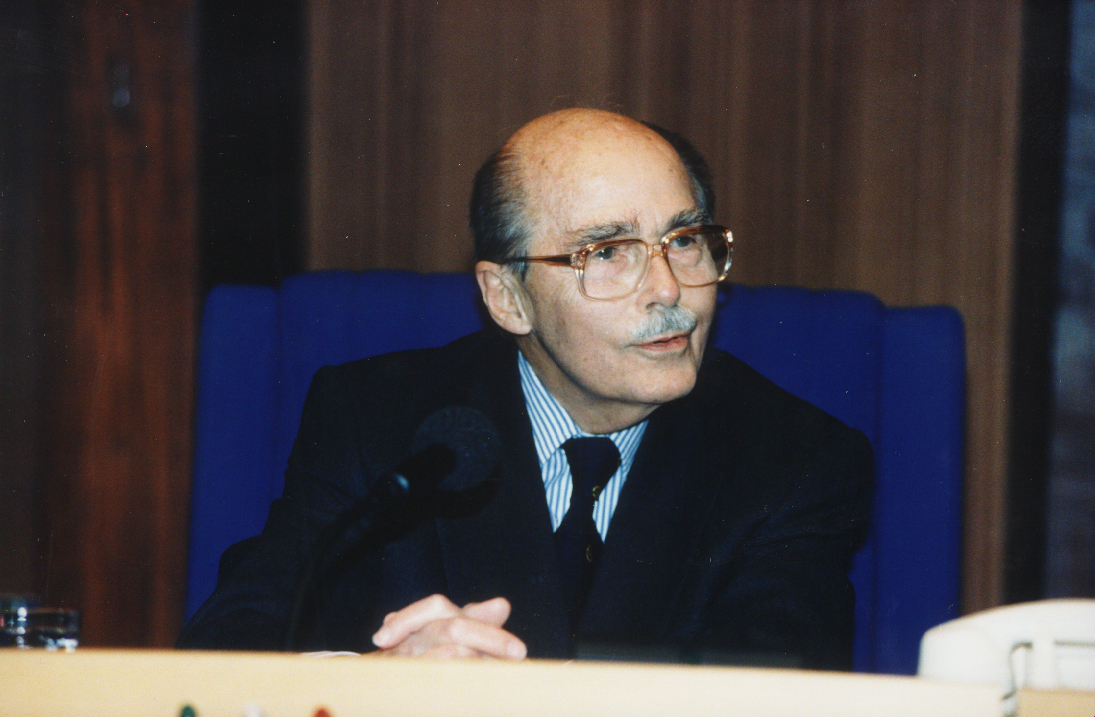
Archduke Otto was born in Reichenau (Lower Austria) on November 20, 1912, as the eldest son of Archduke Karl of Austria (later Emperor Karl I of Austria, King of Hungary, Bohemia, Croatia, etc.) and Princess Zita of Bourbon-Parma (later Empress and Queen). He passed away in the early morning hours of July 4, 2011, at his home in Pöcking at the age of 98.

From 1916, he was the Crown Prince of Austria-Hungary. Following the collapse of the Danube Monarchy at the end of the First World War in 1918, Emperor Karl renounced his participation in government affairs, and the family withdrew to Eckartsau in the Marchfeld. Under pressure from the republican government led by Karl Renner, the Habsburg Laws were passed in March 1919, which included total expropriation and exile. The imperial family subsequently emigrated to Switzerland. After two restoration attempts in Hungary, Emperor Karl was exiled to the island of Madeira, where his family joined him. On April 1, 1922, Emperor Karl passed away at the age of barely 35. Emperor Karl was beatified by Pope John Paul II on October 3, 2004.
The Struggle Against Hitler

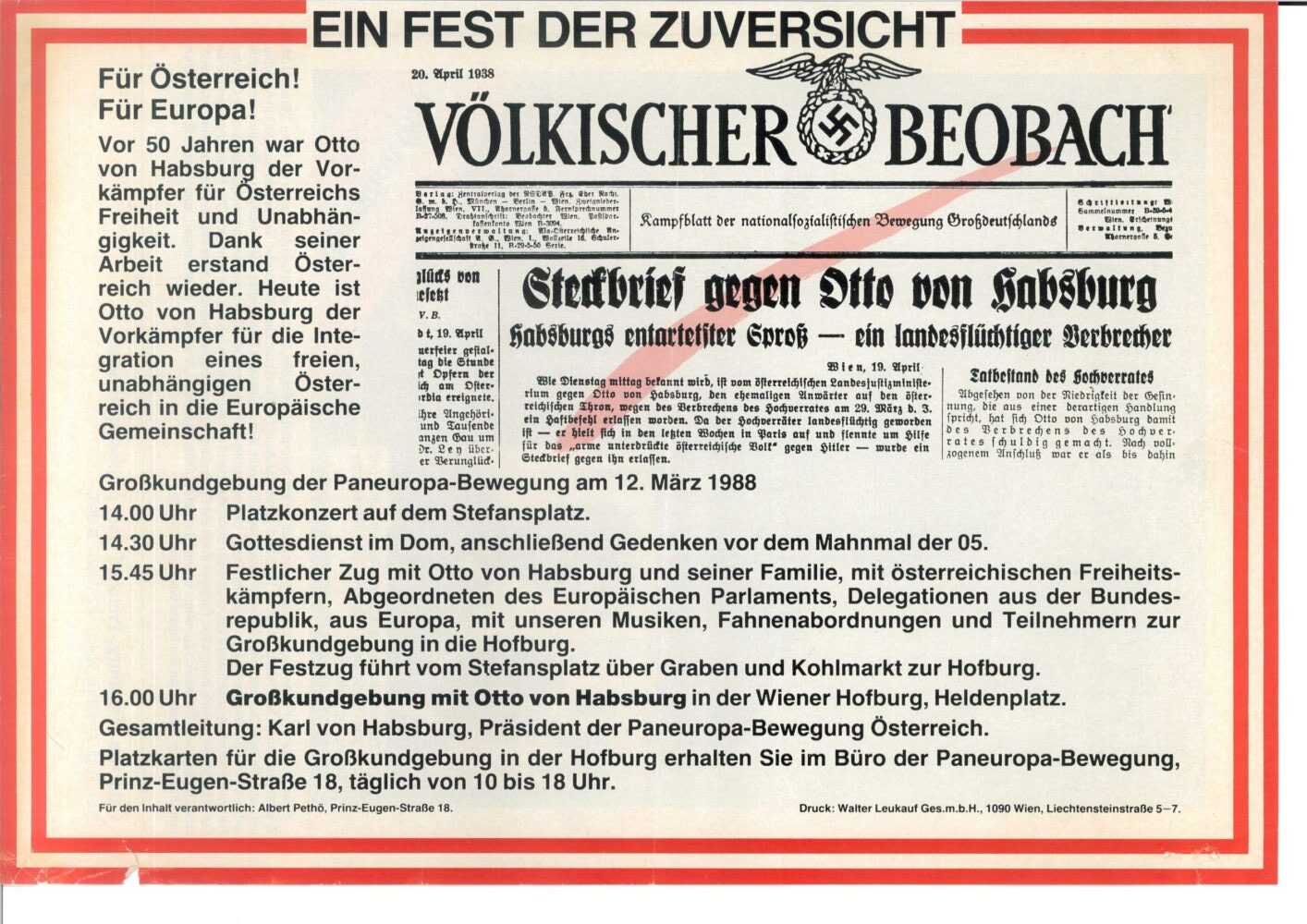
After the Emperor’s death, Empress Zita moved with her children to Lequeitio in the Basque Country, and later to Steenockerzeel in Belgium, where Archduke Otto completed his studies at the University of Leuven. During the research for his doctoral thesis, Otto von Habsburg spent several months in Berlin in the winter of 1932/33, where he observed the rise of National Socialism. He declined an offer for a meeting from Adolf Hitler, as he did not want to be instrumentalized for the “Anschluss” of Austria. At the end of January 1933, he returned to Belgium, from where he openly opposed National Socialism and resisted the “Anschluss” of Austria into the German Reich. Consequently, he was placed on a wanted list in Germany and sentenced to death in absentia.

The Restoration of Austria

In 1939, he traveled to the United States for the first time, establishing close contacts with President Roosevelt and the political circles in Washington. When the Germans invaded Belgium and France, the Habsburgs were forced to flee to the USA for good. During their flight, Otto von Habsburg assisted numerous victims of Nazi persecution, mostly Jews, in escaping overseas.

During the Second World War, he worked in the USA for the restoration of Austria, campaigned against the expulsion of Germans from the Sudetenland and the German eastern territories, and advocated for the self-determination of South Tyrol. In 1944, he returned to Europe but was once again expelled from Austria at the insistence of the Soviet occupiers.

Committed to Europe

Archduke Otto was married to Princess Regina of Saxe-Meiningen (who passed away on February 3, 2010) since 1951. The marriage produced seven children: Andrea, Monika, Michaela, Gabriela, Walburga, Karl, and Georg.

From 1954, Otto and Regina von Habsburg lived in Pöcking in Upper Bavaria. Re-entry into Austria only became possible in 1966 following a decision by the Administrative Court after years of legal disputes.

Dr. Otto von Habsburg published 37 books in nine languages on topics of history, social and societal policy, and particularly European politics. In addition, he authored countless contributions to books, journals, and newspapers.

1912

Born

1966

Re-entry into Austria

2011

Died

A shot not taken is a shot missed!


Motto of Otto von Habsburg

On the Unification of Europe

The further we push the boundaries of freedom to the East, the more secure the center becomes.

In the European Parliament

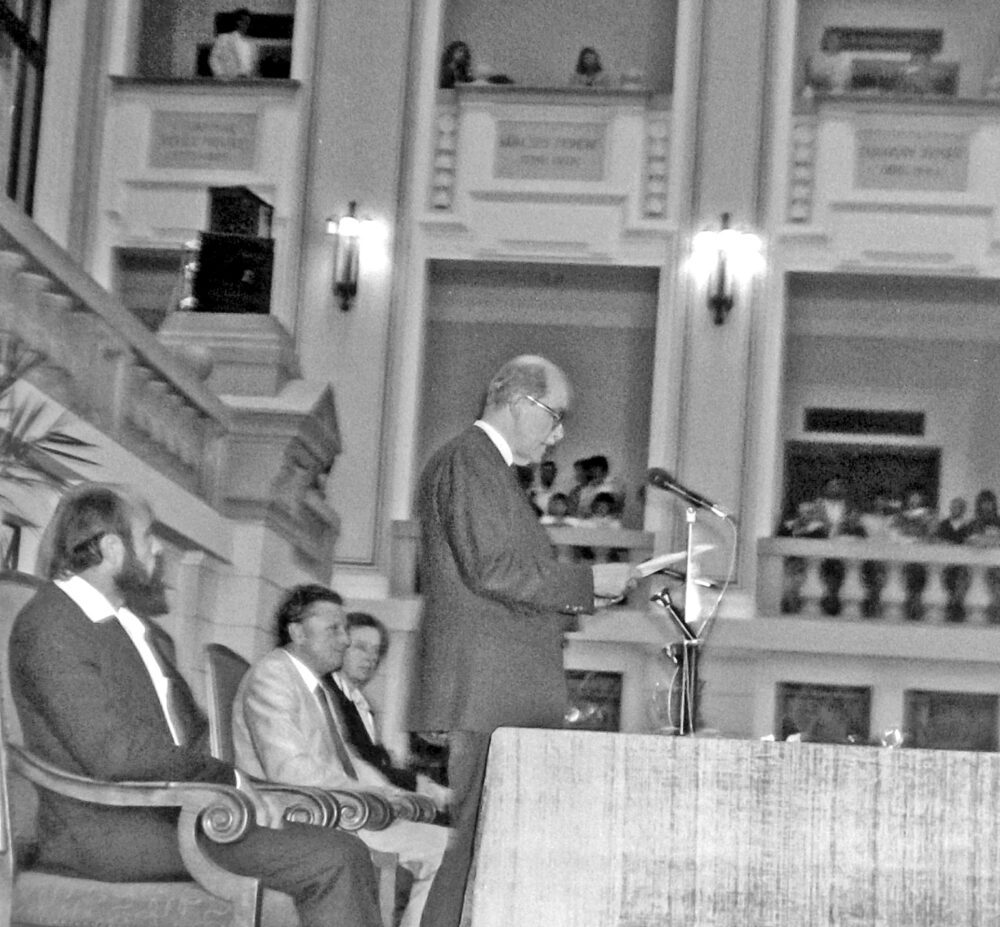
Since the 1930s, Otto von Habsburg had been in close contact with Richard Coudenhove-Kalergi, the founder of the Paneuropean Union, and served as its International Vice President from 1957. Following the death of the Paneuropean founder, he assumed the office of International President of the Paneuropean Union in 1973, in accordance with the founder’s wishes. He expanded the organization into a mass movement for a free, Christian, social, and united Europe, making it an advocate for the peoples of Central and Eastern Europe oppressed by communist regimes. He held this position until December 2004, after which he served as Honorary President of the Paneuropean Union.

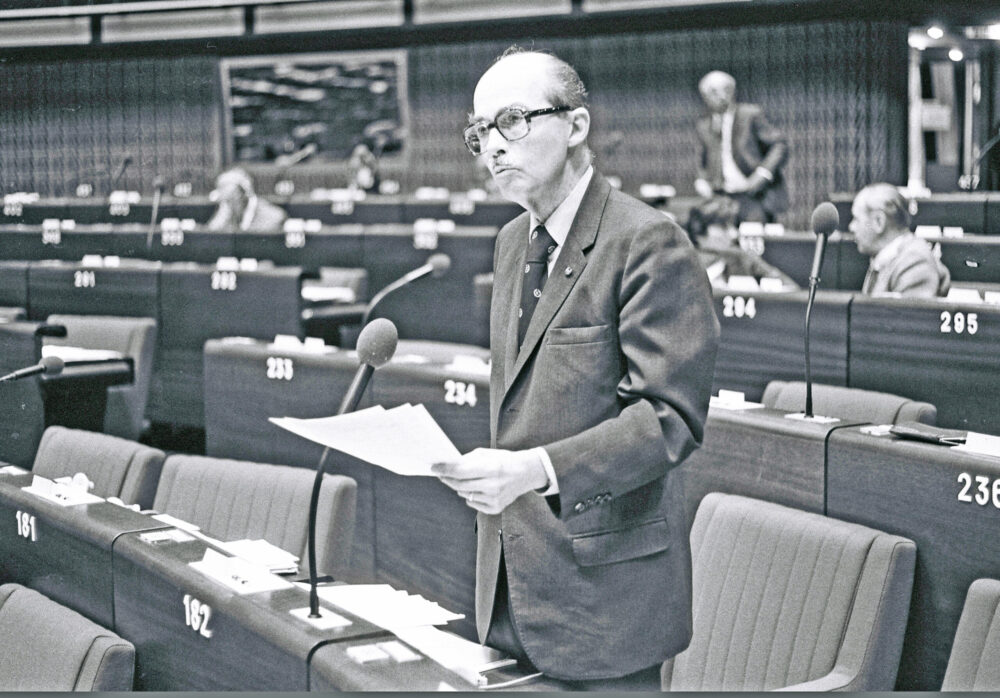
Dr. Otto von Habsburg became a Member of the European Parliament in the first direct election on June 10, 1979. He served there until July 1999 as the chairman of the Christian Democratic EPP Group in the Foreign Affairs Committee, as President and Vice President of the delegation for relations with Hungary, and as the President by seniority of the Parliament. The establishment of an empty chair for the oppressed peoples of Europe, the rediscovery of the concept of Central Europe, the development of a common foreign and security policy, and the opening for the accession of Central and Eastern European states to the European Union all bear his signature.

For the Expansion of the EU

From 1989, he campaigned for the establishment of the Paneuropean Union in the states beyond the “Iron Curtain,” working for the independence of the Baltic states from Moscow and of Croatia, Slovenia, Bosnia-Herzegovina, and Macedonia from Belgrade. On August 19, 1989, Dr. Otto von Habsburg was the patron of the “Paneuropean Picnic” at the Austro-Hungarian border, during which 661 Germans from the GDR ventured the first major mass escape.

Even after leaving the European Parliament in 1999, Dr. Otto von Habsburg continued his political activities. He was an internationally sought-after speaker and an advisor to various Central and Eastern European governments. His political commentaries appeared in numerous newspapers across Europe.

Become a Member

Contribute your ideas, experience, and conviction for a united Europe. Become part of an independent and non-partisan movement.